TV, radio, and online coverage were more likely to link climate change to the Nepal floods than social media, with the strongest connections in the first two days before attention shifted to casualties, rescue efforts and immediate impacts.

UK coverage of Lancet climate-health report led by hay fever angle, but wider risks went underreported
A landmark report on climate and health in Europe was published on Earth Day 2026. Climate News Tracker examines how UK broadcasters covered it and how a focus on hay fever overshadowed its wider findings.
by Rosie Frost (Journalism Insights Analyst), Alina Sandauer (Content Analyst) & Dr Lissa O’Reilly (Content Analyst)
24 April 2026
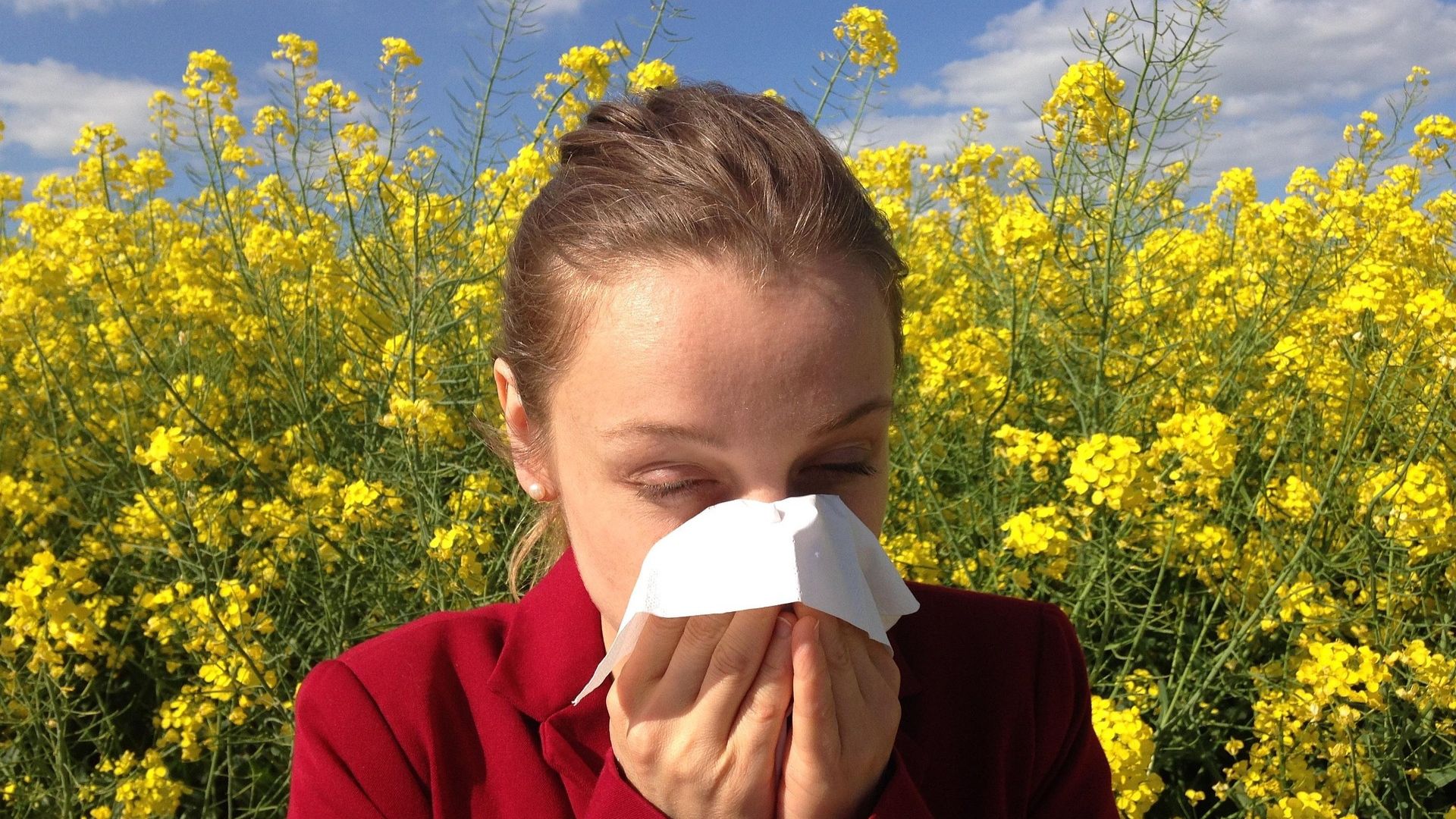
Earth Day, held every year on 22 April, tends to receive more coverage when there is a timely event to anchor the story. In 2026, that event was the publication of a major climate and health report.
On 22 April, the 2026 Europe Report of the Lancet Countdown on Health and Climate Change was published in The Lancet Public Health. Compiled by 65 experts across 46 academic and UN institutions, the report tracks 43 indicators across five domains of how climate change is affecting health across Europe. It’s finding range from rising heat-related deaths and worsening food insecurity to the spread of mosquito-borne diseases and longer pollen seasons.
Climate News Tracker analysed how the report was covered across 25 TV and radio programmes from the BBC, Channel 4, Channel 5, ITV and Sky.
The analysis finds that while the report provided a clear news peg, coverage largely focused on one of its most relatable findings — the extension of hay fever season — with more serious health impacts receiving far less attention.
Key Findings:
- 52% of programmes broadcast on 22 April covered the Lancet Countdown report.
- All led with the same finding: that hay fever season has extended by two weeks due to climate change.
- Just 20% went beyond this to examine the report’s wider findings, including heat-related deaths, food insecurity and the spread of mosquito-borne diseases.
The hay fever hook
Of the 25 programmes analysed, 13 covered the report in some form, while 12 did not.
All of the programmes that covered it led with the same angle: that hay fever season is now two weeks longer because climate change is causing plants to flower for longer. This created a highly consistent narrative across broadcasters, centred on a single, audience-friendly impact.
For millions of people across the UK, this is a highly relatable consequence of a warming climate, and all 13 programmes made that link explicitly. As a way of making climate impacts accessible, it worked.
The story was also amplified beyond traditional broadcasts. Sky News published a social video by weather producer Joanna Robinson, while ITV shared a similar clip from digital video producer Daniel Ajose, both focusing on the hay fever findings.
If it feels like hay fever is hitting harder and earlier every year, you’re not imagining it.
A new review has found hay fever sufferers have symptoms for up to two weeks longer than in the 1990s.@SkyJoRobinson explains.
🔗 https://t.co/UIJVxgdaiP pic.twitter.com/fojtqc4Htw
— Sky News (@SkyNews) April 22, 2026
Beyond the hay fever hook
The report also highlighted a wide range of more serious health impacts.
It found that heat-related deaths have risen across nearly all European regions over the past decade, with extreme heat warning days up 318%. Food insecurity is worsening, dengue outbreak risk has nearly quadrupled, and cases of West Nile Virus and Chikungunya are increasing. Poor air quality is also linked to rising respiratory and cardiovascular diseases.
🆕 The 2026 Europe report of the @LancetCountdown has published.
The report highlights the growing health risks & missed opportunities to better protect & improve health through stronger climate action.
Find out more in @TheLancetPH 👉 https://t.co/yxxGG66RYA #LancetClimate26 pic.twitter.com/TzxRJqcDAh
— The Lancet (@TheLancet) April 22, 2026
Only five of the 13 programmes that covered the report went beyond the hay fever story to explore any of this. BBC Radio 4 Today, BBC Radio 4 Six O’Clock News, BBC News at Ten, 5 News at 5 and Sky News Today with… all looked in some kind of depth at the report’s other findings.
BBC Radio 4’s Today, BBC Radio 4’s Six O’Clock News, BBC News at Ten, 5 News at 5 and Sky News Today with… all examined aspects of the report beyond allergies.
Today and Sky News Today with… both interviewed Lancet Countdown Europe co-directors Professor Cathryn Tonne and Professor Joacim Rocklöv, who spoke about heat deaths and broader health impacts.
BBC Radio 4 Six O’Clock News offered the most comprehensive coverage, including heat-related deaths, extreme heat trends, mosquito-borne diseases and air pollution.
Elsewhere, references were brief. BBC News at Ten noted a “higher risk of heat-related deaths, food insecurity and drought”, while 5 News at 5 and BBC News at One made only passing references without elaboration.
This suggests that while broadcasters used the report to engage audiences, they rarely used it to explore the broader health risks of climate change in depth.
A missed opportunity
The hay fever angle brought climate and health onto 52% of the programmes analysed. That it did not lead to broader coverage reflects a missed opportunity — one also highlighted by the report’s authors, who note that health concerns are widely prioritised by the public but rarely linked to climate change as their underlying cause.
Coverage made climate impacts relatable, but rarely conveyed the scale of the health risks outlined in the report.
How do broadcasters cover Earth Day?
To place this in context, Climate News Tracker also examined how Earth Day has been covered in recent years.
In 2020, 66% of Earth Day mentions discussed the reduction in emissions due to the COVID-19 pandemic.
Coverage peaked in 2021 during President Joe Biden’s “Leaders Summit on Climate”, when he announced a pledge to cut US greenhouse gas emissions by 50 to 52% below 2005 levels by 2030.
56% of TV, radio and online coverage mentioned this event.
By contrast, 2022 and 2026 saw the lowest levels of coverage, with just five mentions across TV, radio and online.
Compared with other international awareness days, Earth Day receives relatively limited attention. In 2025, it was covered less than International Women’s Day, World Mental Health Day and even World Book Day.
Just 25% of programmes broadcast on 22 April 2026 mentioned Earth Day.
This suggests that Earth Day coverage is highly dependent on major news events, rather than functioning as a consistent moment for climate reporting.
Methodology
Climate News Tracker monitored 25 TV and radio programmes broadcast on 22 April 2026 across the BBC, ITV, Channel 4, Channel 5 and Sky.
Each programme was manually reviewed to assess whether it covered the Lancet Countdown report, which findings were included and how the story was framed.
For the Earth Day analysis, coverage included online articles and was tracked across a three-day window (21–23 April) for each year from 2020 to 2026.
Comparisons with other awareness days used the same three-day window.
Related Insights
Nepal floods: Climate change featured early, but faded as coverage turned to the human toll
Climate concern rises to highest level since 2024 after summer of extreme weather
Almost two-thirds of adults in Great Britain now see climate change and the environment as an important issue the UK faces, as record-high summer heat, drought and wildfires brought the impacts of a changing climate closer to home.
Heatwaves, wildfires, emergency alerts and Rosebank: Where did public service media join the dots?
TV and radio were much more likely than online and social media to connect a week of heatwaves, wildfires, emergency alerts and North Sea drilling. Drilling received the least coverage, but was the topic most consistently linked to climate change.

Register here to be the first to receive insights from Climate News Tracker.