Almost two-thirds of adults in Great Britain now see climate change and the environment as an important issue the UK faces, as record-high summer heat, drought and wildfires brought the impacts of a changing climate closer to home.

Heatwaves, wildfires, emergency alerts and Rosebank: Where did public service media join the dots?
TV and radio were much more likely than online and social media to connect a week of heatwaves, wildfires, emergency alerts and North Sea drilling. Drilling received the least coverage, but was the topic most consistently linked to climate change.
by Rosie Frost (Journalism Insights Analyst), Alina Sandauer (Content Analyst), Dr Lissa O’Reilly (Content Analyst), Sam Cardwell (Content Analyst) & Odyssée Ferrillo (Content Analyst)
18 September 2026
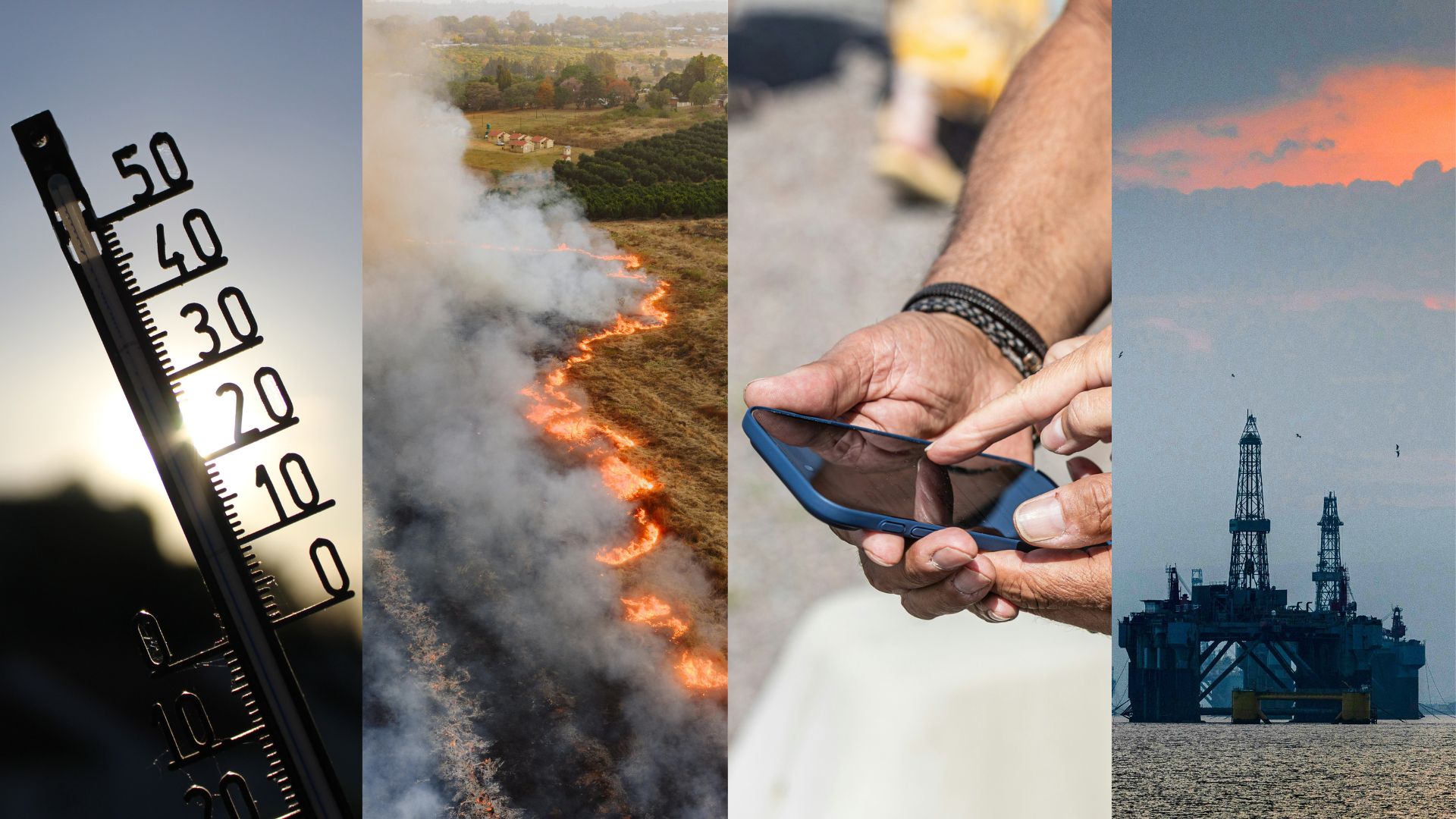
Between 12 and 18 August 2026, four connected events unfolded in the UK.
A heatwave pushed temperatures to 38.1°C at Kew Gardens on 13 August, the fifth-hottest day on record for the UK. Wildfires broke out across England and Wales, including one which destroyed 19 homes in Stourbridge in the West Midlands.
On the evening of 14 August, the worsening wildfire situation led the UK government to send an emergency alert to phones across England and Wales, warning against lighting fires. Three days later, the consultation on the Rosebank oil field closed, days after the Jackdaw gas field consultation had already ended.
Together, the events gave newsrooms an unusual opportunity to connect extreme weather, its immediate consequences and the political debate over future fossil fuel production.
Climate News Tracker analysed how UK public service media organisations covered heatwaves, wildfires, the emergency alert and North Sea oil drilling during this period. We looked at how often the topics were explicitly connected in the same piece of coverage, and whether those connections were also linked to climate change, across TV and radio, standalone online news articles and social media posts on TikTok, Instagram and YouTube Shorts.
Key Findings
-
-
- TV and radio joined the most dots. Ten programmes connected all four topics in the same item, something no online article or social media post did. All ten also linked the topics to climate change.
- North Sea drilling received the least coverage, but was the topic most consistently linked to climate change. It appeared in 27% of topic-mentioning TV and radio programmes, 2% of online articles and 4% of relevant social media posts.
- Wildfires and the emergency alert rarely opened the door to climate context. When the two were linked, climate change was also linked in 25% of TV and radio programmes, 5% of online articles and none of the social media posts.
- On TV and radio, stories connecting more of the week’s events were more likely to mention climate change, particularly when North Sea drilling was among them. Online and social media did not show the same pattern.
- 15% of the 1,416 social media posts analysed mentioned any of the four topics, compared with 92% of the 136 TV and radio programmes.
-
TV and radio joined the most dots
Of the 136 TV and radio programmes analysed, 125, or 92%, mentioned at least one of the four topics. We also identified 202 online articles mentioning at least one topic and 212 relevant social media posts from the 1,416 analysed.
TV and radio produced the widest range of connections between the week’s events. Ten programmes brought heatwaves, wildfires, the emergency alert and North Sea drilling together in the same item. No online article or social media post did the same.
Heatwaves and wildfires were the most common pairing across all three formats. TV and radio also produced more stories connecting three or four of the topics, while combinations involving North Sea drilling were comparatively rare online and on social media.
Two pairings never appeared on their own on any platform during the week: heatwaves with the emergency alert, and the emergency alert with North Sea drilling.
View this post on Instagram
But simply connecting more topics did not necessarily mean audiences received more climate context on every platform.
When did joining the dots lead to climate change?
On TV and radio, stories connecting more of the week’s events were more likely to also make a climate connection.
Of the 47 programmes that linked heatwaves and wildfires, 26, or 55%, also linked them to climate change.
When heatwaves, wildfires and the emergency alert were connected, this rose to 18 of 19 programmes, or 95%. All TV and radio programmes connecting heatwaves, wildfires and North Sea drilling also linked those topics to climate change. The same was true of all ten programmes connecting all four topics.
But online and social media did not follow the same pattern.
Online, 33% of articles connecting heatwaves and wildfires also linked them to climate change. When the emergency alert was added, that fell to 23%.
On social media, climate linkage rose from 3% of posts connecting heatwaves and wildfires to 33% of those also bringing in the emergency alert, but remained far below the 95% recorded on TV and radio for the same three-topic combination.
The difference suggests that the number of topics alone does not explain whether climate change entered a story. Which topics were being connected mattered too.
Wildfires and the emergency alert largely stayed a public-safety story
One pairing stood out for how rarely it led to climate context.
The emergency alert was sent because of the worsening wildfire situation, making the two closely connected as immediate news events. But when wildfires and the emergency alert appeared together, their connection was less likely to be linked to climate change than any other two-topic combination on every platform.
On TV and radio, 25% of coverage connecting wildfires and the alert also linked them to climate change. Online, the figure was 5%. None of the social media posts connecting the two also made a climate link.
In much of this coverage, wildfires and the alert therefore remained an immediate public-safety story rather than opening into a wider explanation of climate change.
North Sea drilling showed almost the opposite pattern.
Rosebank and Jackdaw drilling had the smallest reach and the strongest climate link
North Sea drilling and the debate around the Rosebank and Jackdaw fields received less coverage than the other three topics.
Drilling appeared in 27% of TV and radio programmes, 2% of online articles and 4% of social media posts that mentioned at least one of the four topics.
Wherever drilling appeared alongside another topic, climate change was much more consistently part of the discussion.
On TV and radio, when heatwaves and North Sea drilling appeared together, they were linked to climate change in every instance. The same was true when wildfires and drilling appeared together.
All four online articles that mentioned North Sea drilling linked it to climate change.
TikTok and Instagram showed a similar pattern. On these, drilling was the most frequently climate-linked topic despite having the lowest level of coverage. The exception was YouTube Shorts, where the single post mentioning North Sea drilling did not make a climate link.
The week’s immediate impacts, particularly wildfires and the emergency alert, were covered without much climate context. Once the debate about future oil and gas production entered the story, climate change became much more difficult to separate from it.
What did joining the dots look like?
A handful of TV and radio programmes showed how the week’s different stories could be brought together.
On 16 August, a Sky News Today with… special report about the North Sea oil industry visited the Britannia platform. It named Rosebank and Jackdaw directly, explaining that their approvals had been revoked after a legal challenge.
A guest argued that approving Rosebank made little sense “in the middle of a climate crisis,” while the report connected the summer’s heatwaves, drought and wildfires with the debate about future drilling.
The following day, as the day the Rosebank consultation closed, BBC’s Six O’Clock News ran a segment that juxtaposed the potential tax revenue from the field with an interview with a climate campaigner who argued that repeated heatwaves and wildfires across Europe strengthened the case against approval. The correspondent also stated that the case against Rosebank had grown stronger given the wildfires and heatwaves the country had seen in recent weeks.
On the same day, 5 News at 5 used a Greenpeace mural painted on a wildfire-scorched North Wales mountainside as the frame for the drilling decision. The segment explored the tension between climate action and fossil fuel support while also covering the Rosebank consultation and ongoing wildfires.
Online coverage made similar connections though never quite linked all four topics in one article.
An ITV report on 17 August covering the Rosebank consultation quoted a campaign group arguing that recent heatwaves and wildfires were evidence that further drilling would harm the climate.
A separate piece on the same day, about industry calls for the development to be approved, quoted a campaigner arguing that record heatwaves and wildfires had made the consequences of fossil fuel dependence difficult to ignore.
These examples showed one route through which coverage could move from what was happening, to the immediate consequences, to climate change and finally to decisions about future fossil fuel production.
A timeline of topics
The way these stories were connected also changed as the week developed.
TV and radio coverage began on 12 August with relatively straightforward heatwave and wildfire reporting. Much of it was built around the government’s COBRA meeting on extreme heat, drought and wildfires, alongside immediate human stories such as water shortages and swimming safety.
At this stage, coverage rarely reached beyond heatwaves and wildfires.
Once the emergency alert was sent on 14 August, the story widened.
Panel discussions and newspaper reviews began considering the legitimacy of the alert alongside drought funding, support for farmers and the government’s position on North Sea drilling.
As the Rosebank consultation deadline approached, some TV and radio coverage began bringing all four topics together. Campaigners and correspondents cited the summer’s heatwaves and wildfires directly as evidence in the drilling debate, while some programmes explored whether a summer of extreme weather changed the arguments around approving Rosebank or Jackdaw.
Online and social media followed a similar arc, but were less likely to connect multiple topics in the same item.
Both moved from heatwave and wildfire reporting early in the week towards the emergency alert once it was issued, and then toward the Rosebank decision as the consultation deadline approached.
What did audiences learn?
Which platform audiences got their news from shaped whether the week’s events appeared as separate stories or parts of a wider climate picture.
TV and radio provided the clearest examples of joining the dots. Ten programmes brought heatwaves, wildfires, the emergency alert and North Sea drilling together in the same story, and all ten also connected those topics to climate change.
Online and social media made fewer connections between the week’s events; in fact, no publisher made the link between all four topics in any single web article.
But the type of story mattered too. Wildfires and the emergency alert were closely connected as immediate events, yet coverage linking the two rarely introduced climate change. They were predominantly presented as a public-safety story.
North Sea drilling showed the opposite pattern. Rosebank and Jackdaw received relatively little coverage, just 2%, but where it did feature, climate change was almost always part of the discussion. This made the debate over future oil and gas production one of the clearest routes through which audiences were shown how the week’s events could fit into a wider climate story.
On social media, 15% of posts touched on any of the four topics. Of those, 3% of heatwave-and-wildfire posts linked to climate change. North Sea drilling had the lowest coverage of any topic on social media, but on TikTok and Instagram it was the topic most often linked to climate change.
The result was an uneven picture. Audiences heard extensively about the heatwave, wildfires and immediate response, but were less consistently shown how those events related to climate change and decisions about future fossil fuel production. TV and radio provided the clearest examples of newsrooms joining those dots, particularly as the Rosebank consultation deadline approached.
Methodology
Climate News Tracker used keyword searches to identify TV and radio and online coverage published between 12 and 18 August 2026 relating to four topics:
- Heatwave (“heat wave,” “heatwave,” “record temperature,” “rising temperature,” “extreme heat,” “heat”)
- Wildfire (“wildfire,” “wildfires,” “wild fire,” “wild fires”)
- North Sea drilling (“rosebank,” “jackdaw,” “drilling,” “north sea”)
- Emergency alert (“emergency alert,” “emergency alerts”).
All items returned were reviewed in full to establish if topic mentions were valid, whether they were linked together and whether those connections were also linked to climate change.
Topics were coded as linked where the coverage explicitly presented them as related, rather than simply mentioning them within the same item.
Social media posts across TikTok, Instagram and YouTube Shorts were reviewed manually in full without a keyword search.
Television and radio coverage was drawn from BBC (including Radio 4 and the World Service), ITV, Channel 4, Channel 5 and Sky News flagship programmes.
Online coverage was drawn from BBC, ITV Hub, Channel 4 and Sky News websites.
Social media accounts differed by platform: TikTok covered seven accounts, Instagram eight (adding BBC Weather and ITV Weather), and YouTube Shorts six (excluding ITV Politics and the weather accounts).
This analysis measures whether the four topics were mentioned and linked together, and whether those connections were also linked to climate change. It does not assess the accuracy or quality of individual references.
TV, radio and online percentages are calculated against items mentioning at least one of the four topics (125 and 202 items, respectively).
Social media percentages are calculated against posts mentioning at least one of the four topics. 212 of 1,416 posts across TikTok, Instagram and YouTube Shorts.
Online has no total-published figure to compare against, so its percentages are of topic-mentioning items only.
Related Insights
Climate concern rises to highest level since 2024 after summer of extreme weather
Extreme weather brought the fossil fuel transition into UK news, but rarely as the main story
Heatwaves provided the main opportunity to connect extreme weather with the move away from fossil fuels, but the transition was more often a secondary part of the story and was rarely discussed on TikTok.
Newsrooms needn’t fear climate is ‘boring’. Audiences don’t think so
Former Head of the BBC Newsroom and Controller of BBC World Service Mary Hockaday argues that extreme weather is giving journalists clear opportunities to explain the climate story, while new audience research suggests the public wants that context. by Mary Hockaday (Former Head of the BBC Newsroom and World Service controller) News crews have been […]

Register here to be the first to receive insights from Climate News Tracker.