Climate coverage reached its highest level of 2026 during two June heatwaves, but the rise was short-lived. Climate News Tracker’s latest quarterly analysis finds extreme weather remained the only story that consistently broke through, while other climate stories with clear news pegs received little attention.

Santa Marta fossil fuel summit: Just one UK broadcast programme covered it
Just one of the 117 UK TV and radio programmes monitored covered the Santa Marta summit, the world’s first international conference focused on transitioning away from fossil fuels.
by Rosie Frost (Journalism Insights Analyst), Alina Sandauer (Content Analyst) & Dr Lissa O’Reilly (Content Analyst)
18 May 2026
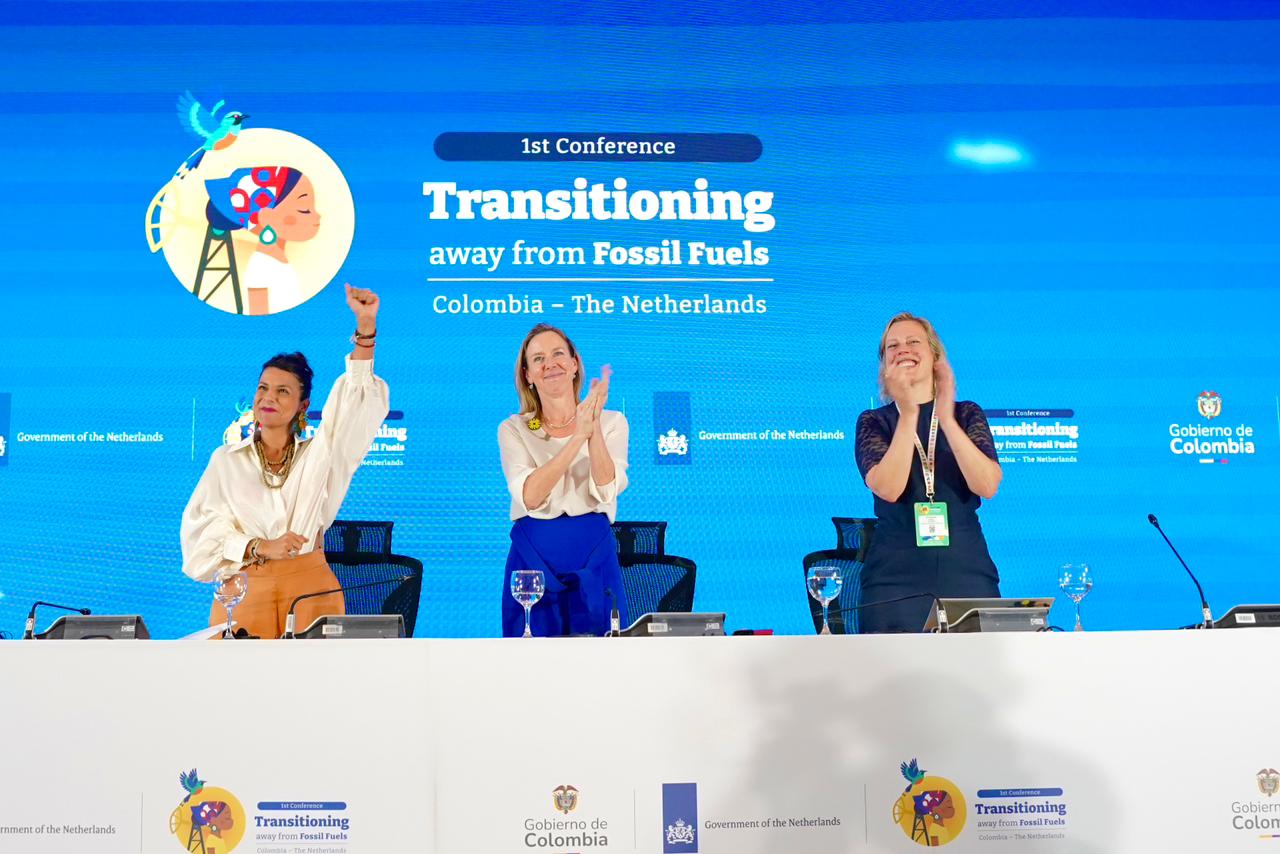
Just one of the 117 TV and radio programmes monitored by Climate News Tracker during and immediately after the Santa Marta summit covered the conference on phasing out fossil fuels.
The summit, the first international conference dedicated to transitioning away from fossil fuels, was held in Santa Marta, Colombia, from 24 to 29 April. Co-hosted by Colombia and the Netherlands, it brought together 57 countries representing around a third of the global economy.
Climate News Tracker monitored 117 flagship TV and radio news programmes across the BBC, ITV, Channel 4, Channel 5 and Sky News between 24 and 30 April to assess how the summit was covered.
Key Findings:
- Just one of the 117 BBC, ITV, Channel 4, Channel 5 and Sky programmes monitored covered the Santa Marta summit.
Who covered the summit?
Of the 117 programmes we tracked during the Santa Marta conference and immediately after, only one covered it.
BBC Radio 4’s The World Tonight on 30 April aired a full interview with Dr Matt Webb, Associate Director for Global Clean Power Diplomacy at think tank E3G. The presenter introduced the conference as one “not everyone might have even known was happening”.
Webb described the summit as a voluntary gathering of 57 countries, alongside civil society, academics, scientists and industry leaders, focused on pathways away from fossil fuels without seeking a negotiated consensus.
Webb framed the summit as focused on implementation rather than ambition, citing what the head of the International Energy Agency had described as the biggest energy shock since 1973 as a source of urgency.
On the absence of the US, China and India, Webb said organisers had sought to create a “safe space” for progressive countries. However, he noted the participation of major fossil fuel exporters including Australia, Brazil, Canada and Norway, adding that larger economies would be “paying very, very close attention” to the summit’s outcomes.
First ever talks to ditch fossil fuels as UN deadlock deepens https://t.co/5peSrAx6dJ
— BBC News (UK) (@BBCNews)
April 24, 2026
The BBC also covered the summit online in an article by environment correspondent Matt McGrath published on 24 April. The piece examined which countries were participating, frustration with the UN climate process that helped drive the Santa Marta initiative, and the science around climate tipping points.
The article also included a quote from UK Climate Envoy Rachel Kyte, who was attending the talks, saying that the UK was “committed to working with other countries to support those wishing to drive forward their transitions to clean and secure energy“.
What was missed?
During the summit, France became the first major economy to announce a national fossil fuel phaseout roadmap, including targets to end coal use by 2030, oil by 2045 and gas by 2050. It was the summit’s most concrete national announcement, but not its only significant development.
A new independent science panel for the global energy transition was launched to provide rapid analysis for countries developing phaseout plans. EU climate chief Wopke Hoekstra also suggested that future international climate diplomacy could increasingly take place through smaller plurilateral initiatives outside the UN framework.
Organisers also confirmed that a second summit would take place in Tuvalu in 2027, co-hosted with Ireland.
That a summit focused on transitioning away from fossil fuels received almost no UK broadcast coverage reflects the broader challenge climate diplomacy continues to face in breaking through the daily news agenda.
Methodology
Climate News Tracker monitored 117 flagship TV and radio news programmes across the BBC, ITV, Channel 4, Channel 5 and Sky News between 24 and 30 April 2026. A programme was counted as covering the summit if relevant keywords appeared in the transcript and manual review confirmed the coverage related to Santa Marta.
Search terms included: Santa Marta, climate, summit, Colombia and fossil fuels.
Online monitoring covered BBC News and Sky News only.
Related Insights
Climate coverage hit a 2026 high, but only because of two heatwaves
What audiences learned about Europe’s July wildfires on Instagram, TikTok and YouTube
Climate News Tracker analysed how UK public service media organisations covered Europe’s July 2026 wildfires across Instagram, TikTok and YouTube. Audiences consistently received vivid reporting on the destruction caused by the fires, but were far less likely to hear why conditions for them are becoming more common.
How people got their news shaped what they learned about the June heatwave
While warnings and health advice came through reliably everywhere, the climate science behind the heat was explained least often in the formats younger audiences rely on most for their news.

Register here to be the first to receive insights from Climate News Tracker.