Climate scientist voices rarely feature across six months of North Sea drilling coverage leading up to the Jackdaw approval. Politicians dominate the airwaves.

Lancet’s warning on climate-linked heat deaths covered by one item across UK public service media
The 2026 Lancet Countdown rarely featured across public service media TV, radio, online and short-form social video, despite its warning on rising heat deaths. Its release on Budget day may help explain why.
by Rosie Frost (Journalism Insights Analyst), Alina Sandauer (Content Analyst), Dr Lissa O’Reilly (Content Analyst), Sam Cardwell (Content Analyst) & Odyssée Ferrillo (Content Analyst)
11 November 2026
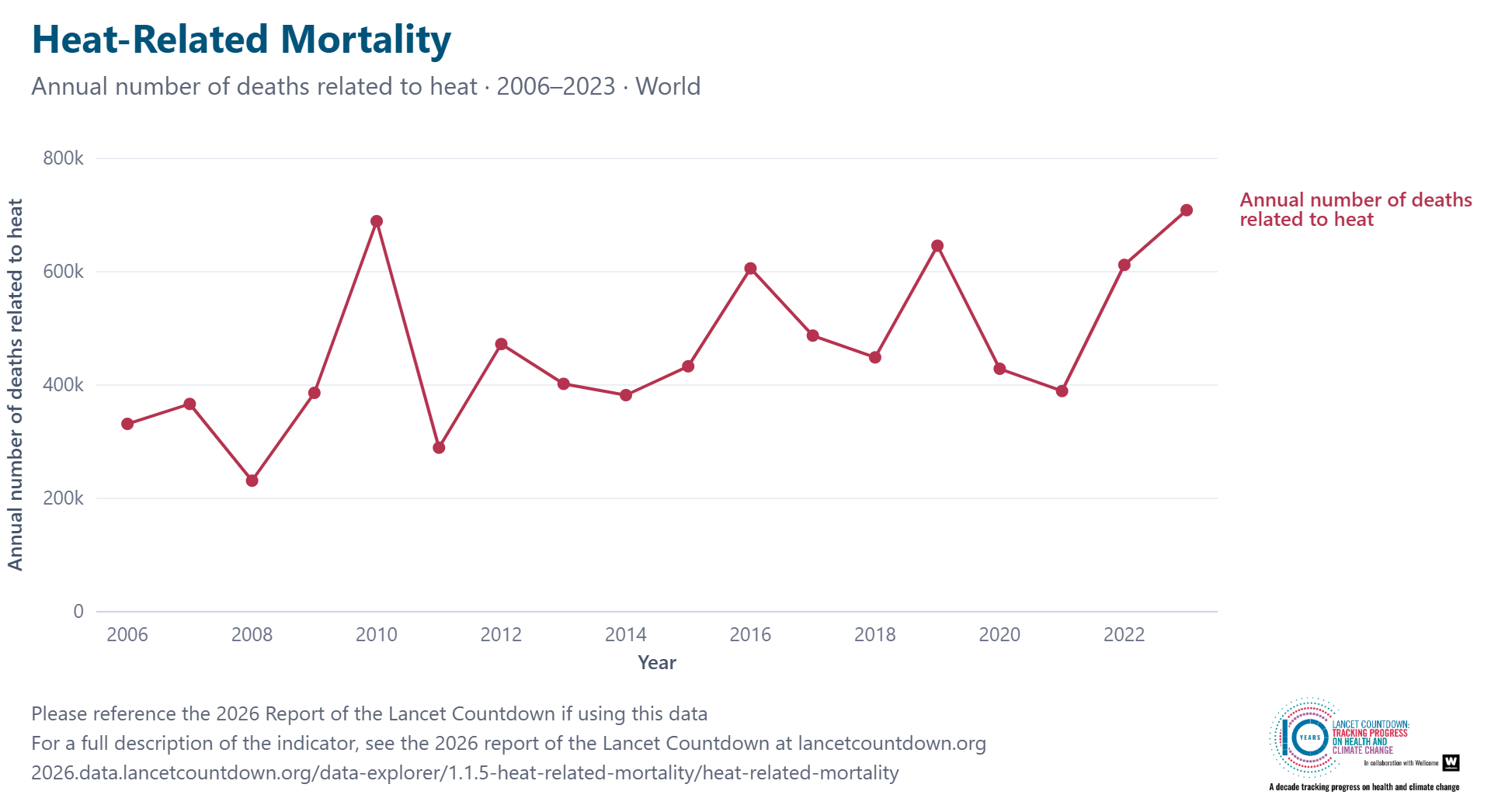 The Lancet Countdown on Health and Climate Change is an annual report that tracks how climate change is affecting people’s health. The 2026 edition calls for climate change to be declared a public health emergency and warns that heat’s health impacts are outpacing the action countries are taking, drawing on input from 146 researchers from more than 100 institutions worldwide.
Climate News Tracker analysed TV and radio programmes, online articles and short-form social video published across five days, from 28 October to 1 November 2026 to see how its findings were covered.
Why it matters: The countdown was published 12 days before the COP31 climate summit, after a summer of record heat, drought and wildfires in the UK.
The report linked heat to a record 710,000 deaths in 2023, and an average of about 370,000 heat deaths a year over the period were attributable to climate change.
These figures offer a measure of what extreme heat costs in lives, and how much of that cost is driven by warming.
The numbers
- 1 of 113 TV and radio broadcasts covered the report (less than 1%).
- We found no online articles or short-form social video posts covering it.
- No other coverage we found explicitly linked climate change and health.
- No external voices appeared in the coverage.
Source: Climate News Tracker analysis of 113 TV and radio broadcasts from 36 news and current affairs programmes, plus online articles and short-form social video, published between 28 October and 1 November 2026.
The key findings
The report appeared once in all of the TV and radio coverage we monitored
BBC Radio 4’s Today programme ran a short news-in-brief on the morning of 28 October. It reported that scientists from 30 countries, working with the WHO, were calling for climate change to be declared a public health emergency, and that the health impacts of heat are outpacing action.
Online articles and short-form social video did not cover it
We found no online articles or short-form social video posts covering the report.
The report was published on Budget day
The report came out on 28 October, the same day as the Chancellor’s first Autumn Budget. It was competing for space with one of the biggest days in the UK news calendar.
France saw a similar pattern
French media monitor Quota Climat found very similar levels of coverage, with one national French TV news bulletin covering the report in the two days after publication.
The timing
The Lancet Countdown is usually published in the weeks before the UN climate summit. The 2026 edition came out on 28 October, 12 days before COP31 opens in Antalya, Türkiye, on 9 November. As a global report, its release is timed for an international audience rather than any one country’s news agenda
This was also the same date as the UK Autumn Budget, one of the busiest days in the political calendar. Chancellor John Healey delivered his first Budget, the first since Andy Burnham became Prime Minister, at 12.30pm alongside the Office for Budget Responsibility’s economic and fiscal outlook. MPs debated it the following day.
But news of the Budget came before it was delivered. The Treasury announced a set of measures on 26 October, and on the morning of 28 October it briefed that gas standing charges would be scrapped. Reports that the Chancellor would reverse the planned cut to the cash ISA limit also circulated before he spoke.
So, this global health report was competing for space with measures on household energy bills and savings.
The report also had no UK finding that could have anchored coverage, as its health findings are global. The UK is only mentioned for halving its emissions since the 1990s and for making the largest proportional cut to overseas aid among major donors, at 34% between 2024 and 2026.
The Lancet Countdown’s Europe report, published in April, received far more coverage with its findings landing closer to home for UK audiences.
On its launch day, 13 of the 25 TV and radio programmes we monitored covered it. All of them led with its findings on hay fever, and five of them went on to cover wider risks such as heat-related deaths. In October, 1 of 113 broadcasts covered the global report across five days.
The bottom line
Across 113 broadcasts in the five days from its publication, the 2026 Lancet Countdown was covered once, and we found no other coverage linking climate change and health. Its release on Budget day and the lack of a UK-specific finding are likely to have limited its reach. Months after a UK summer of record heat, the human cost of that heat was largely absent from public service media coverage that week.
What to watch out for
- Whether coverage returns to the findings ahead of COP31.
- Whether health professionals appear alongside climate scientists when heat and health are covered.
- Whether weather bulletins and forecasts connect extreme heat to its health effects.
- Whether the report’s wider findings, such as food insecurity and infectious disease, are covered.
Methodology
Climate News Tracker used keyword searches to find potentially relevant coverage published between 28 October and 1 November 2026. Keywords included variations of Lancet Countdown, Lancet, climate change, climate and health, health impacts of climate change, heat-related deaths, climate-related deaths, deaths from air pollution or extreme heat, and fossil fuels and health.
We then manually reviewed every item returned to establish whether it covered the report or linked climate change and health. Items that used the terms in an unrelated context were excluded.
TV and radio coverage was drawn from 113 broadcasts of 36 news and current affairs programmes across BBC One, BBC Two, BBC Radio 4, Channel 4, Channel 5, ITV1 and Sky News, including the weather bulletins in BBC News at One, Six and Ten.
Online coverage was drawn from BBC, ITV, Channel 4 and Sky News articles.
Short-form social video coverage was drawn from the titles and transcripts of posts on the Instagram and TikTok accounts of BBC News, ITV News, Good Morning Britain, Channel 4 News, Channel 5 News and Sky News, plus the BBC Weather and ITV Weather Instagram accounts.
This analysis is a snapshot of a five-day window across these outlets.
Related Insights
Only on Jackdaw decision day did climate change feature prominently in North Sea drilling coverage
Climate coverage peaked during summer heatwaves, then fell as public concern remained high
Climate News Tracker’s Q3 analysis finds that climate-related terms appeared in nearly half of monitored UK TV and radio news programmes in August, before falling in September. Meanwhile, rising coverage of energy costs was not matched by an increase in mentions of renewable energy.
Andy Burnham’s energy pledges reported as a cost of living story, not a climate one
As energy bills head for their biggest rise in four years, climate change featured for seven seconds in Andy Burnham’s conference speech and in none of the 22 standalone online articles analysed.

Register here to be the first to receive insights from Climate News Tracker.