As energy bills head for their biggest rise in four years, climate change featured for seven seconds in Andy Burnham’s conference speech and in none of the 22 standalone online articles analysed.

What audiences learned about Europe’s July wildfires on Instagram, TikTok and YouTube
Climate News Tracker analysed how UK public service media organisations covered Europe’s July 2026 wildfires across Instagram, TikTok and YouTube. Audiences consistently received vivid reporting on the destruction caused by the fires, but were far less likely to hear why conditions for them are becoming more common.
by Sam Cardwell (Content Analyst), Rosie Frost (Journalism Insights Analyst), Alina Sandauer (Content Analyst), Dr Lissa O’Reilly (Content Analyst) & Odyssée Ferrillo (Content Analyst)
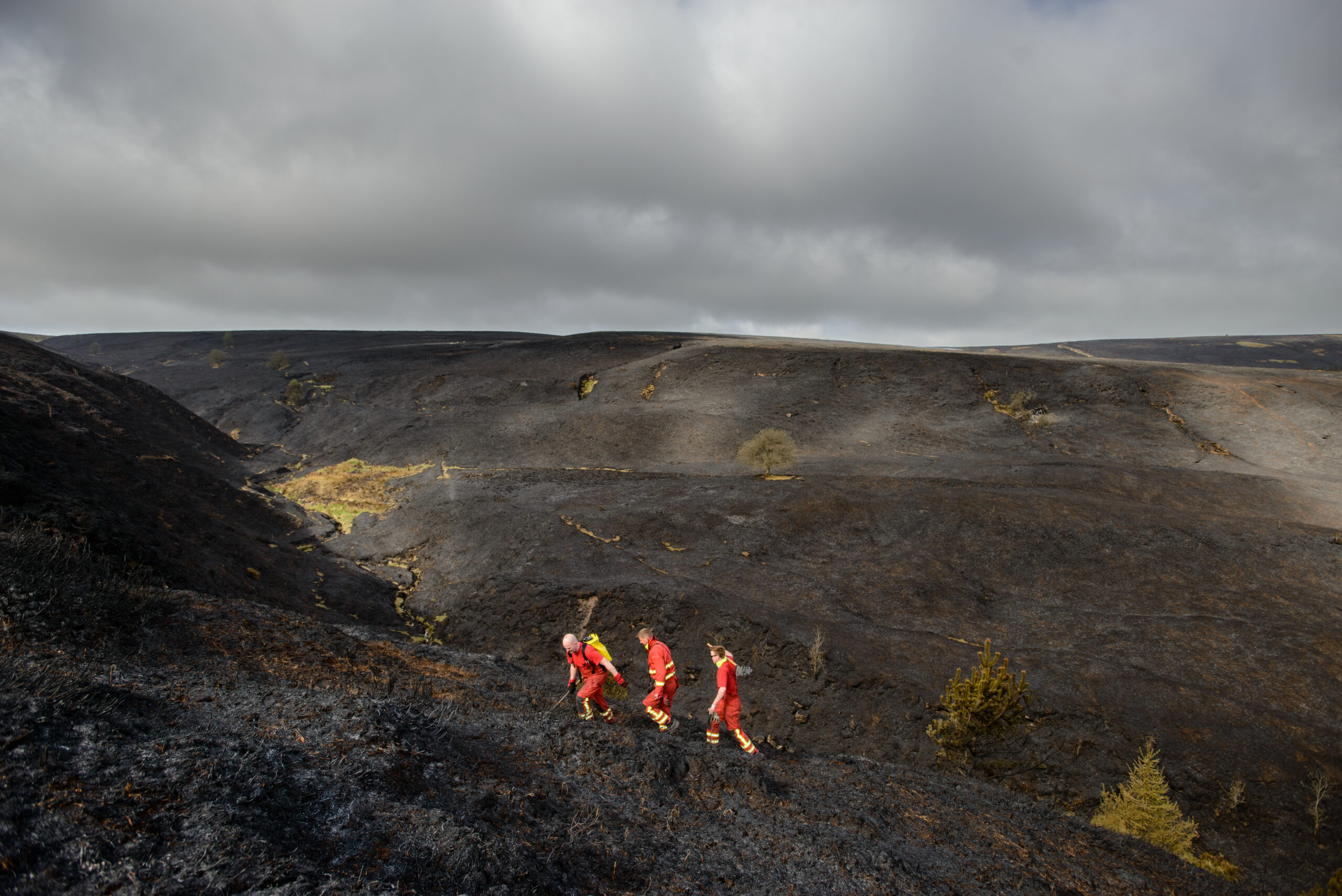
Firefighters first responded to the fire on Wednesday 30th April. Since then, it grew to reportedly roughly the size of 325 football pitches.
Wildfires are increasingly becoming a recurring news story during periods of hot, dry weather in the UK and Europe. While the immediate cause of an individual wildfire may vary, scientists have found that hotter, drier conditions linked to climate change are increasing the likelihood and severity of many fires.
How journalists explain that distinction can shape how audiences understand these events.
Climate News Tracker analysed 108 short-form videos and a sample of 18 longer YouTube videos published between 1 and 15 July 2026 by the Instagram, TikTok and YouTube accounts of the UK’s major public service media organisations to understand what audiences were told about the wildfires.
The analysis focused primarily on short-form video because these formats are increasingly where audiences, particularly younger audiences, encounter breaking news. Longer YouTube videos were reviewed separately to explore whether additional running time created more opportunity for explanation.
The analysis found audiences consistently received information about the risks and impacts of the fires. They were much less likely to receive explanations of why wildfire conditions are becoming more common, or how climate change influences them.
Key Findings
- 8.3% of short-form videos explicitly linked the wildfires to climate change.
- 42.6% linked the wildfires to the ongoing heatwave.
- 35.2% distinguished between what started the fire and the conditions that allowed it to spread.
- 71.3% discussed deaths, displacement or other harms.
- Three videos mentioned impacts on nature or wildlife.
The chart below summarises the information audiences were most likely, and least likely, to receive from short-form wildfire coverage.
How often were wildfires linked to climate change?
Across all short-form videos, 8.3% explicitly linked the wildfires to climate change. Instagram was most likely to make this connection (11.3%), followed by YouTube Shorts (7.1%) and TikTok (4.9%).
One example came from Channel 4 News, where foreign correspondent Secunder Kermani reported from Bédar in Spain. While explaining that the cause of the fire remained under investigation, he noted that “man-made climate change” was making events like these more frequent and more severe.
View this post on Instagram
Many more videos acknowledged the fires as exceptional without explaining why. Around one in four described conditions as unprecedented, unusually severe or worsening, while referring to extreme heat, drought or dry vegetation without connecting those conditions to climate change.
The findings suggest audiences were often given part of the explanation, like descriptions of hotter or drier conditions, without consistently linking those conditions to climate change.
Heatwaves were mentioned more often than climate change
While direct references to climate change were uncommon, 42.6% of short-form videos linked the wildfires to the ongoing heatwave. Instagram was most likely to make this connection (54.7%), while YouTube Shorts was least likely (28.6%), with TikTok in between (31.7%).
The findings mirror Climate News Tracker’s analysis of the June 2026 heatwave, where public service media organisations were more likely to discuss the immediate weather event and its impacts than to explain its relationship with climate change. That analysis found just 16% of Instagram and TikTok posts linked the June heatwave to climate change.
Separating ignition from the spread
One of the clearest findings was how often reports distinguished between the cause of a wildfire and the conditions that allowed it to spread.
Wildfires can begin in a range of ways, including lightning strikes, power lines, machinery, campfires or deliberate ignition. Whether they become large, destructive fires depends on a different set of factors, including heat, drought, dry vegetation and strong winds.
Niko Efstathiou, writing for the Reuters Institute for the Study of Journalism, identifies the cause of a wildfire as a point where inaccurate claims can spread, as investigations into the ignition can take months. The conditions that allow a fire to spread, by contrast, are usually already known, in the sense that fire and weather services can observe heat, drought and wind in real time.
Whether a specific instance of those conditions was made more likely by climate change is a separate question, one that requires dedicated attribution research.
Just over a third of short-form videos (35.2%) made this distinction. TikTok (39.0%) and Instagram (37.7%) made it at a similar rate, while YouTube Shorts was notably lower (14.3%).
Helping audiences distinguish between ignition and spread provides important context without requiring certainty about the exact cause of an individual fire.
What audiences learnt about the fires
The dominant focus across all platforms was the immediate impact of the wildfires.
More than seven in ten short-form videos (71.3%) discussed deaths, injuries, evacuations, displacement or damage caused by the fires. YouTube Shorts was most likely to explain risk or harm (78.6%), ahead of Instagram (73.6%) and TikTok (65.9%).
Wildfires were overwhelmingly presented as human emergencies rather than environmental events, with three videos mentioning damage to nature or wildlife. TikTok was most likely to mention this (4.9%), followed by Instagram (1.9%), whereas no YouTube Shorts videos did.
@skynews Video captures the Fire and Rescue Service battling moorland wildfires in the Peak District. A major incident has been declared and people have been urged to avoid the area. #Wildfire #PeakDistrict #UK ♬ original sound – Sky News
The analysis focused primarily on coverage while the fires were still burning, but reporting on the aftermath and extent of the fires may present another opportunity to cover environmental damage and impacts on wildlife.
Who explained the wildfires?
People directly affected by the fires were the most common external voices in short-form videos, appearing in 58% of videos. No climate scientists or wildfire specialists featured in the short-form videos analysed.
Emergency services featured in 25%, while politicians or political party representatives featured in 16%.
Emergency services featured in 7.3% of TikTok videos, 5.7% of Instagram videos, and 14.3% of YouTube Shorts videos. Political representatives featured in 4.9% of TikTok videos, 3.8% of Instagram videos, and 7.1% of YouTube Shorts videos.
The absence of specialist voices meant there were relatively few opportunities to explain how changing climatic conditions influence wildfire risk.
Did longer YouTube videos tell a different story?
Format appeared to shape how much explanation audiences received. Alongside short-form content, Climate News Tracker analysed 18 longer YouTube videos which covered the wildfires.
Compared with short-form reporting, these longer videos were more likely to explain harms, link to the heatwave, and separate the ignition of the fires from the conditions that allowed them to spread.
This may reflect the additional time and space available in longer videos, and the television reports being uploaded.
What does this tell us about wildfire reporting?
Audiences consistently received vivid reporting on the destruction caused by the fires and practical information about their impacts. They were much less likely to receive explanations of why wildfire conditions are becoming more common, how climate change influences those conditions, or why the cause of a fire and the conditions that allow it to spread are different questions.
Part of this gap may come down to who got to speak. With no climate scientists or wildfire specialists featured across the sample, there were few opportunities to draw the connection between individual fires and the wider conditions driving them.
The findings also suggest format matters. Longer YouTube videos created more space for explanation than short-form content. In these videos, reporting focused primarily on immediate events and impacts, featuring more than four times as many external voices on average. Even so, climate scientists and wildfire specialists remained absent, showing the gap wasn’t simply a matter of space.
As wildfires become an increasingly familiar feature of UK and European news coverage, helping audiences understand both what is happening and why may become an increasingly important part of climate journalism.
Methodology
Climate News Tracker analysed 126 videos published between 1 and 15 July 2026 by the Instagram, TikTok, YouTube Shorts and YouTube accounts of BBC News, BBC Weather, ITV News, ITV Weather, Good Morning Britain, Channel 4 News, Channel 5 News and Sky News.
Videos were coded for whether they:
- explicitly linked the wildfires to climate change;
- linked the fires to the ongoing heatwave;
- distinguished between the ignition of the fires and the conditions that allowed them to spread;
- described the fires as exceptional or unusually severe;
- discussed deaths, displacement or other harms;
- mentioned impacts on nature or wildlife;
- and featured external contributors.
All videos were manually reviewed by Climate News Tracker. Short-form content (Instagram, TikTok and YouTube Shorts) formed the primary sample. Longer YouTube videos were analysed separately to explore how reporting differed across formats.
Related Insights
Andy Burnham’s energy pledges reported as a cost of living story, not a climate one
Nepal floods: Climate change featured early, but faded as coverage turned to the human toll
TV, radio, and online coverage were more likely to link climate change to the Nepal floods than social media, with the strongest connections in the first two days before attention shifted to casualties, rescue efforts and immediate impacts.
Climate concern rises to highest level since 2024 after summer of extreme weather
Almost two-thirds of adults in Great Britain now see climate change and the environment as an important issue the UK faces, as record-high summer heat, drought and wildfires brought the impacts of a changing climate closer to home.

Register here to be the first to receive insights from Climate News Tracker.